
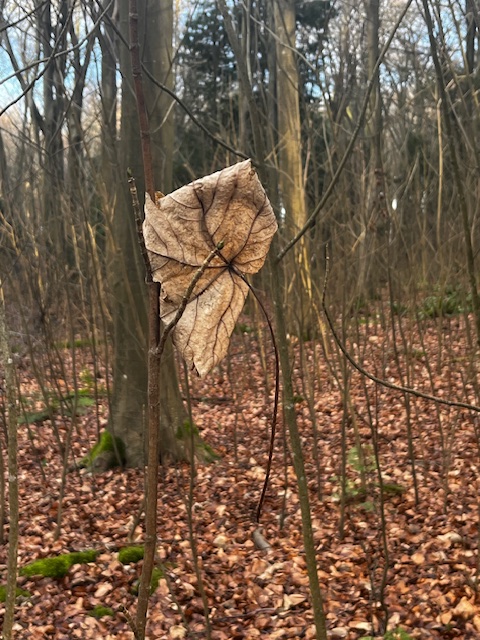
24th: Spotted all the seasons in one picture!
Buds appearing at the tips of branches representing Spring.
The large leaf almost looking like a flower head, representing Summer.
The forest floor covered in leaves, representing Autumn.
Bare branches throughout the woods representing Winter.
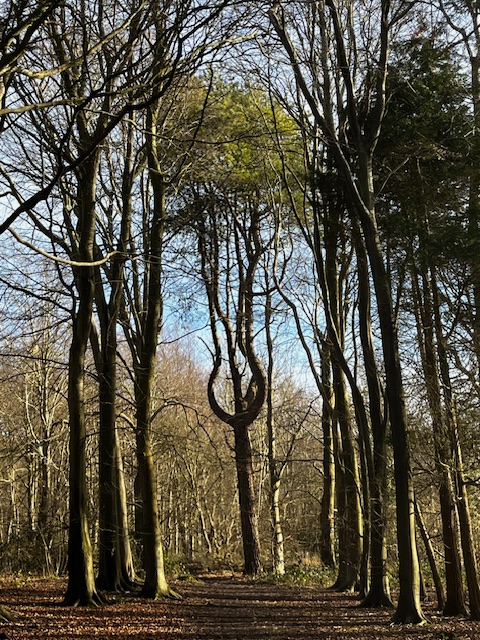
25th: Some lovely shapely tree branches.
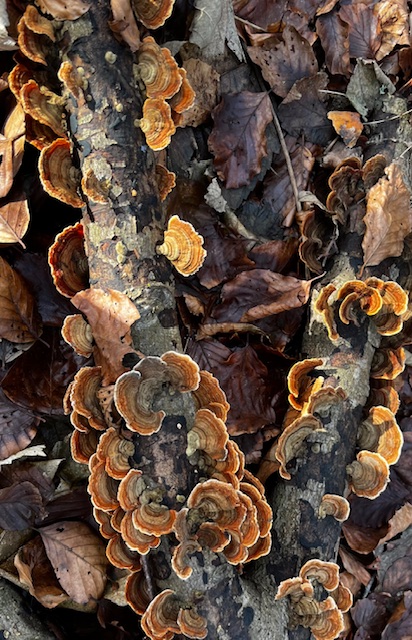
26th: Turkeytail Fungus.
The Turkeytail is a small, tough, bracket fungus that grows in tiered layers on dead wood – mainly hardwood, such as beech or oak. It is common and can be found on rotting stumps and branches. Fungi belong to their own kingdom and get their nutrients and energy from organic matter, rather than photosynthesis like plants.
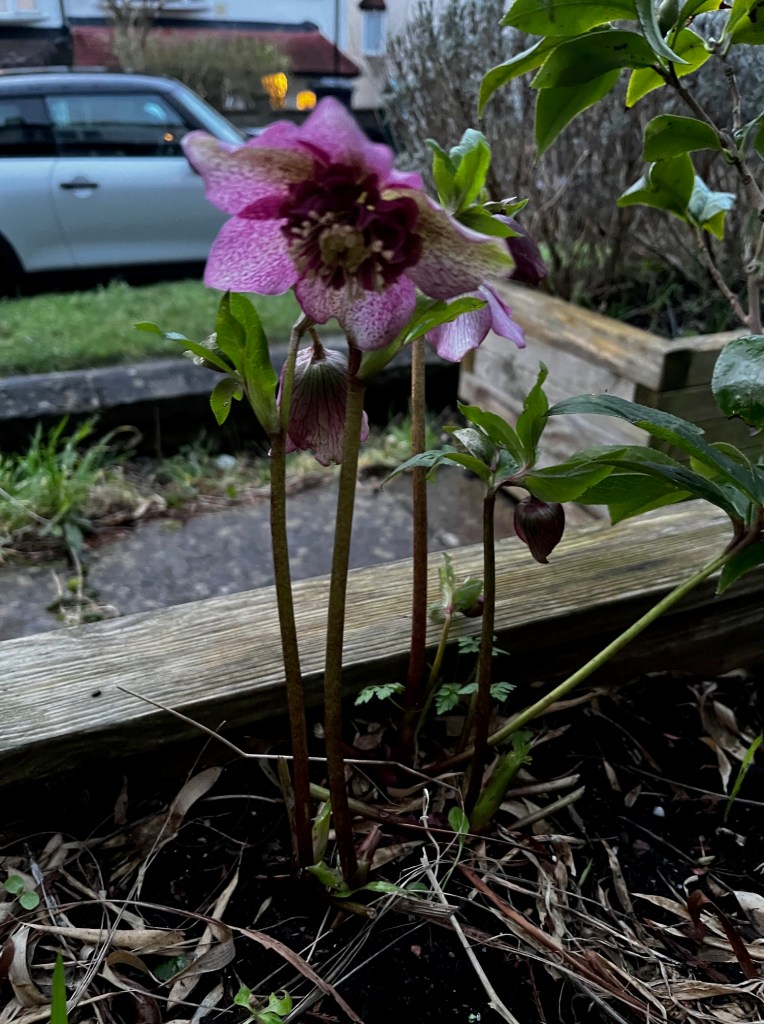
27th: A rose out in January!
Helleborus ×hybridus is a group of evergreen, late-winter or early-spring flowering perennials in the buttercup family (Ranunculaceae) with the common names of hellebore, oriental hellebores, or Lenten rose (the name Christmas rose refers to H. niger).
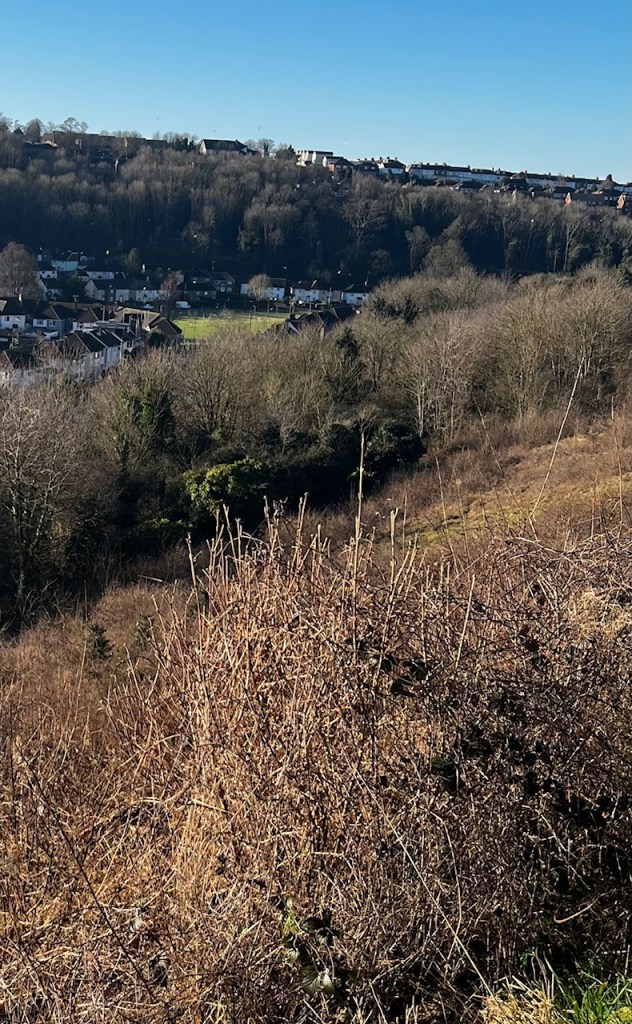
28th: Everything is very bare.
Taking in the view, most of the bushes and distant trees are bare, though they are going to change soon.
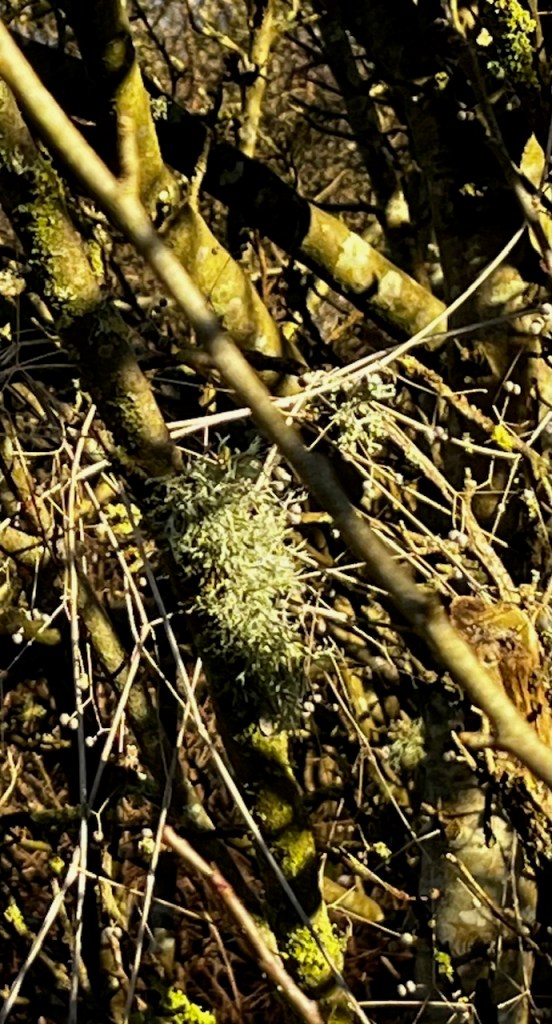
29th: Soft green Lichen stands out on a bare branch
Ramalina farinacea is widespread and can survive in shaded or sunny locations. Lichens are made up of two or more different organisms. These exist in a mutually beneficial relationship called symbiosis. So you can think of lichen as a successful partnership, between a fungus and an algae or cyanobacteria. The fungus element requires carbohydrate as a food source. The algae or cyanobacteria on the other hand require shelter. As the algae/cyanobacteria are photosynthetic they provide the food for the fungus in return for that shelter. It’s a partnership that works.
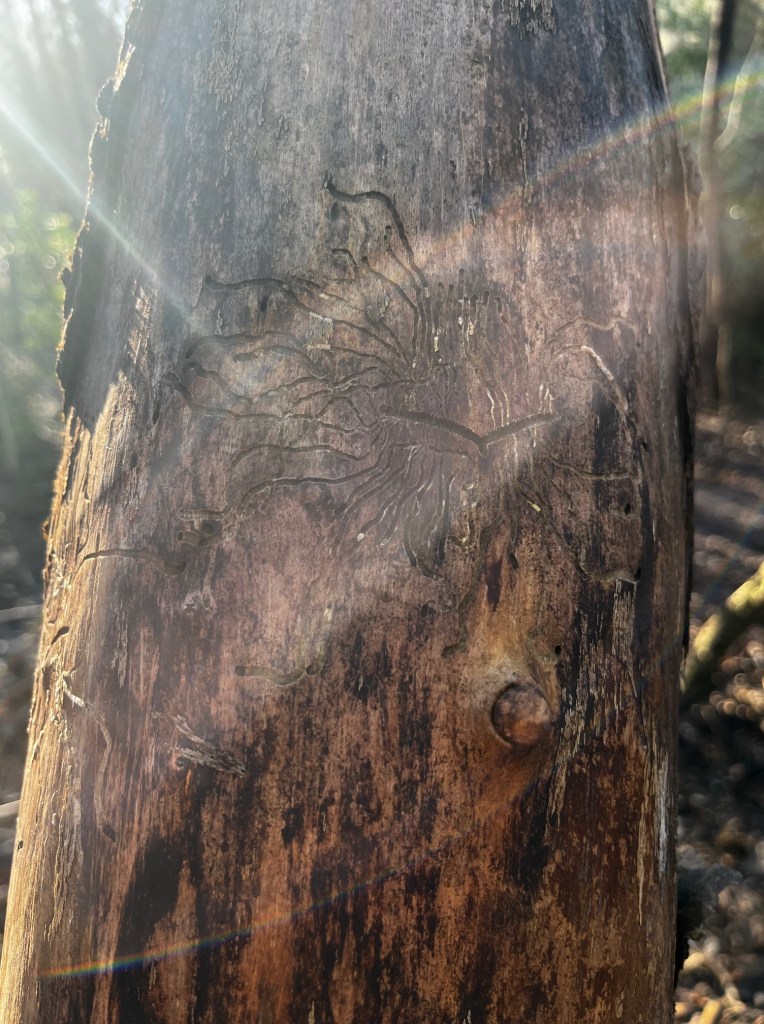
30th: Bark Beetle makes stunning patterns.
Bark beetles are a group of insects that tunnel and reproduce under the bark of trees. How it works: The female digs the central (vertical) gallery and waits at the entrance of the gallery for a male to join her. Eventually, she will lay her eggs along the sides of the gallery and as the larvae hatch they will tunnel out causing the radiating (horizontal) galleries.

 Inspired by Nature