
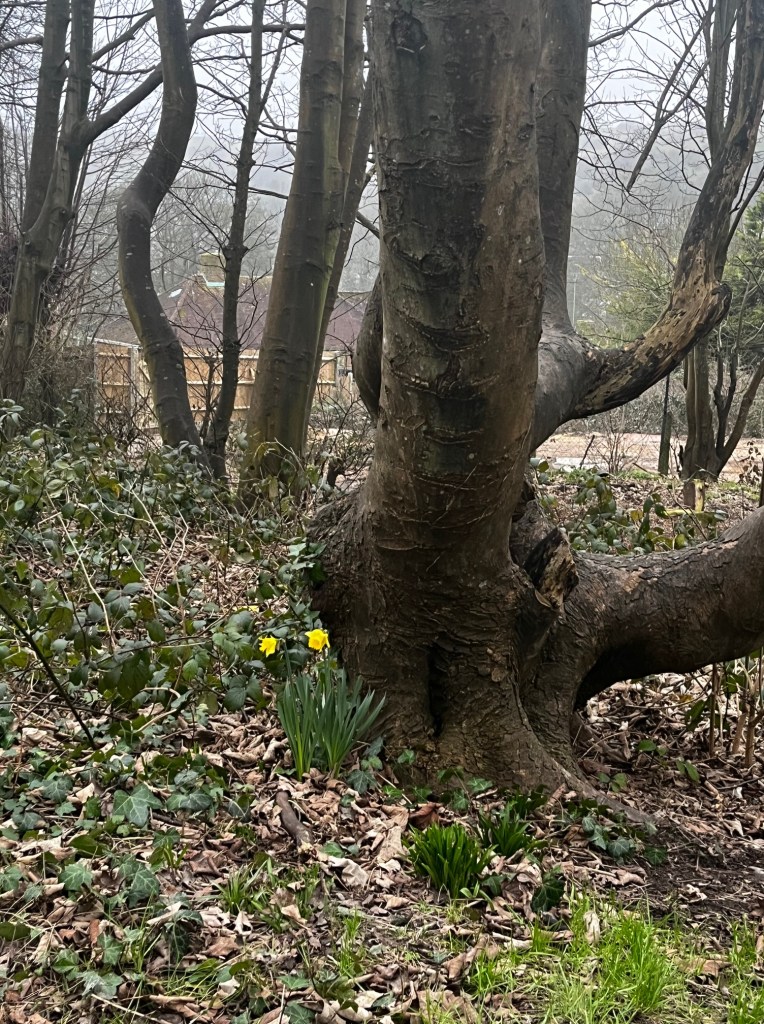

17th: First Daffodil spot of the year, just outside Bevendean Community Garden.
Daffodils are native to Europe, North Africa and other areas around the Mediterranean Sea. Daffodils of one form or another are documented as having grown in England since before the 14th century.
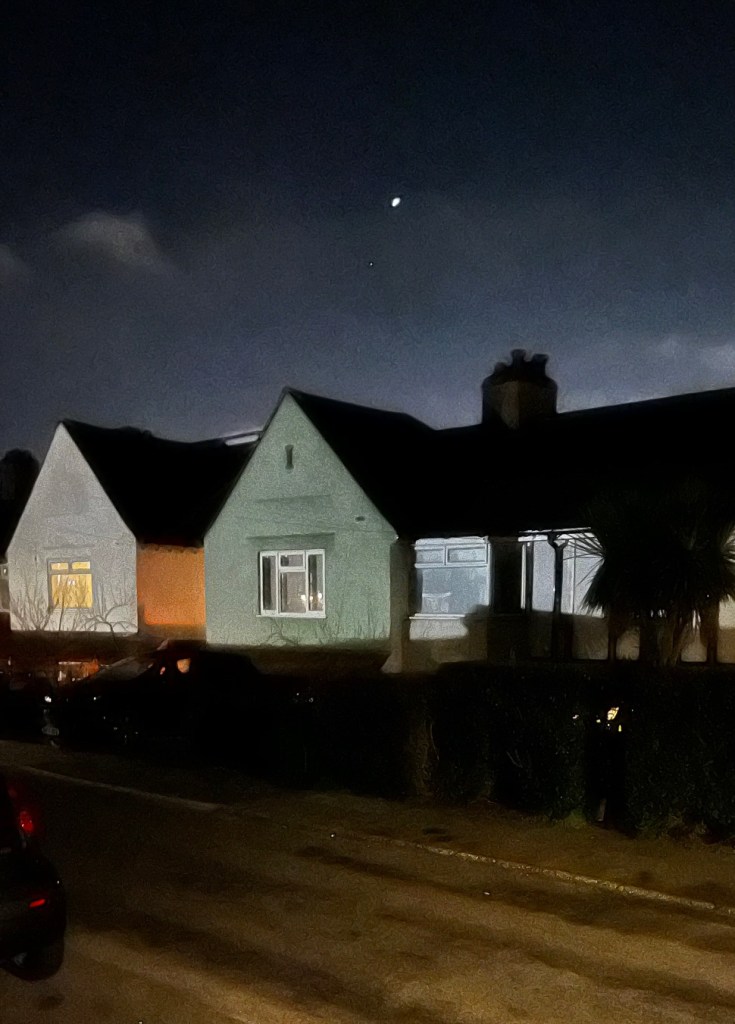
18th: Jupiter spotted bright and blazing.
The January planetary alignment includes Mars, Jupiter, Saturn and Venus all visible to the naked eye a. Neptune and Uranus will be there, too, more difficult to see.
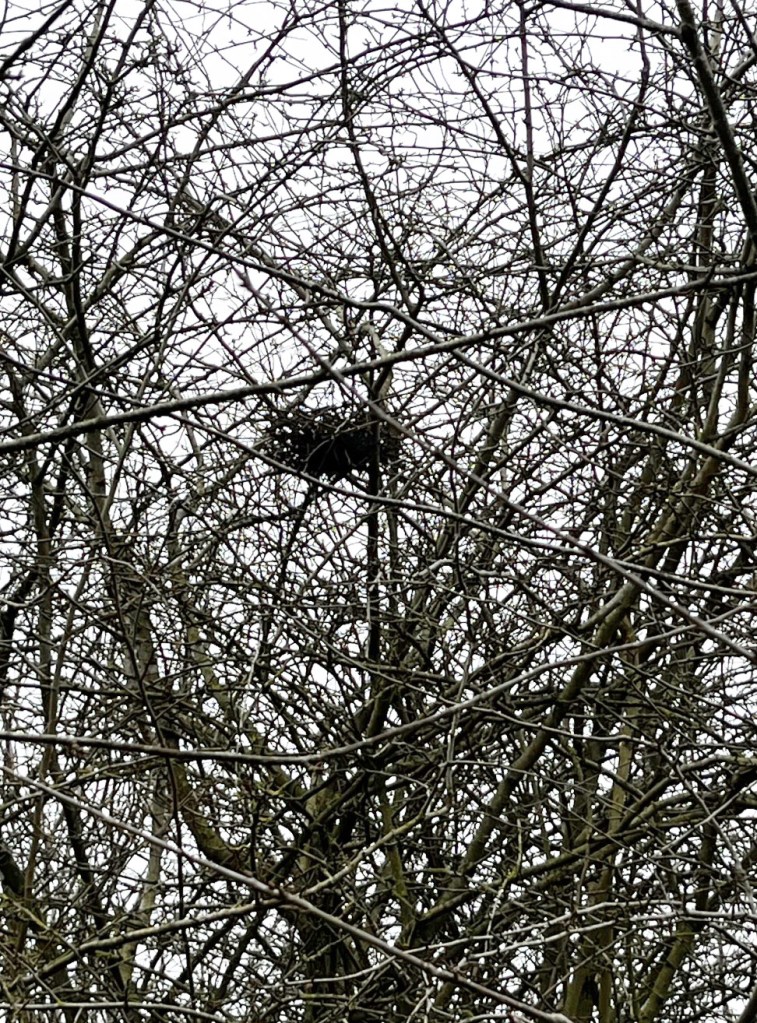
19th: Clear view of birds nests.
With there being very few leaves on trees it’s a good time to see how many nests you can see. The male woodpigeon brings nesting materials to the female who then builds the nest. She lays sticks over each other in an untidy platform-like nest and then lays two eggs, which her and her partner both incubate.
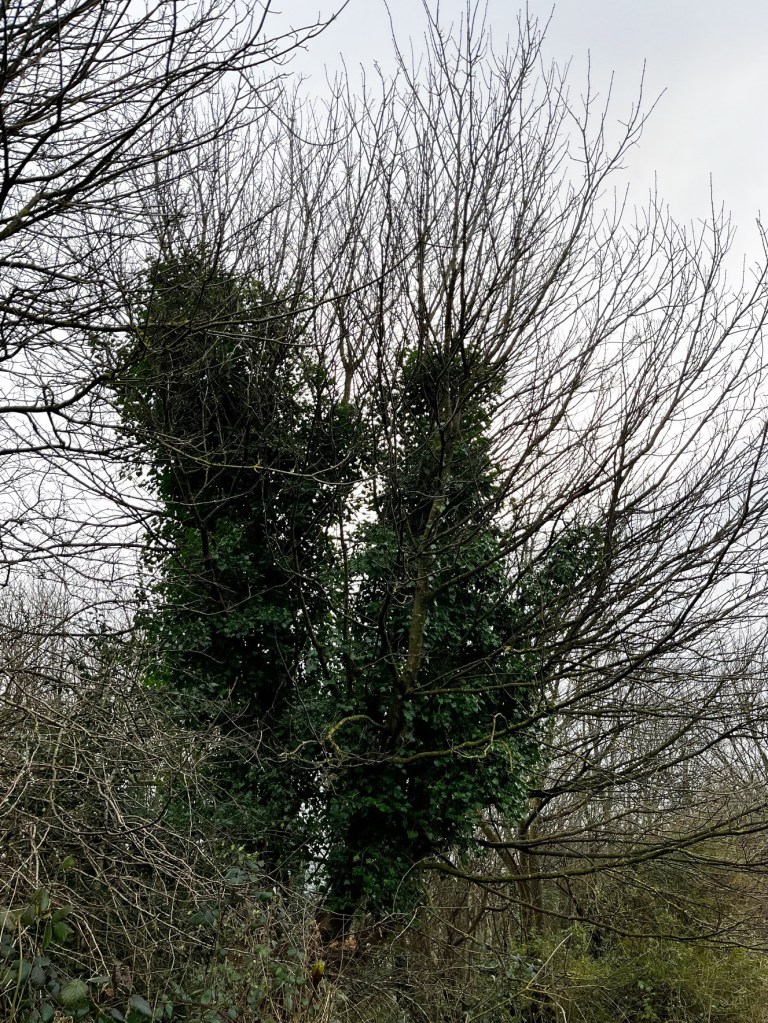
20th: Ivy hugging trees stands out against the bare bones of trees.
Ivy uses trees and walls for support, allowing it to reach upwards to better levels of sunlight. It is not a parasitic plant and has a separate root system in the soil and so absorbs its own nutrients and water as needed. Ivy does not damage trees and its presence doesn’t indicate that a tree is unhealthy, even supports at least 50 species of wildlife. The ancient Greeks and Romans believed that wearing a wreath of ivy leaves around the head would prevent one from getting drunk.
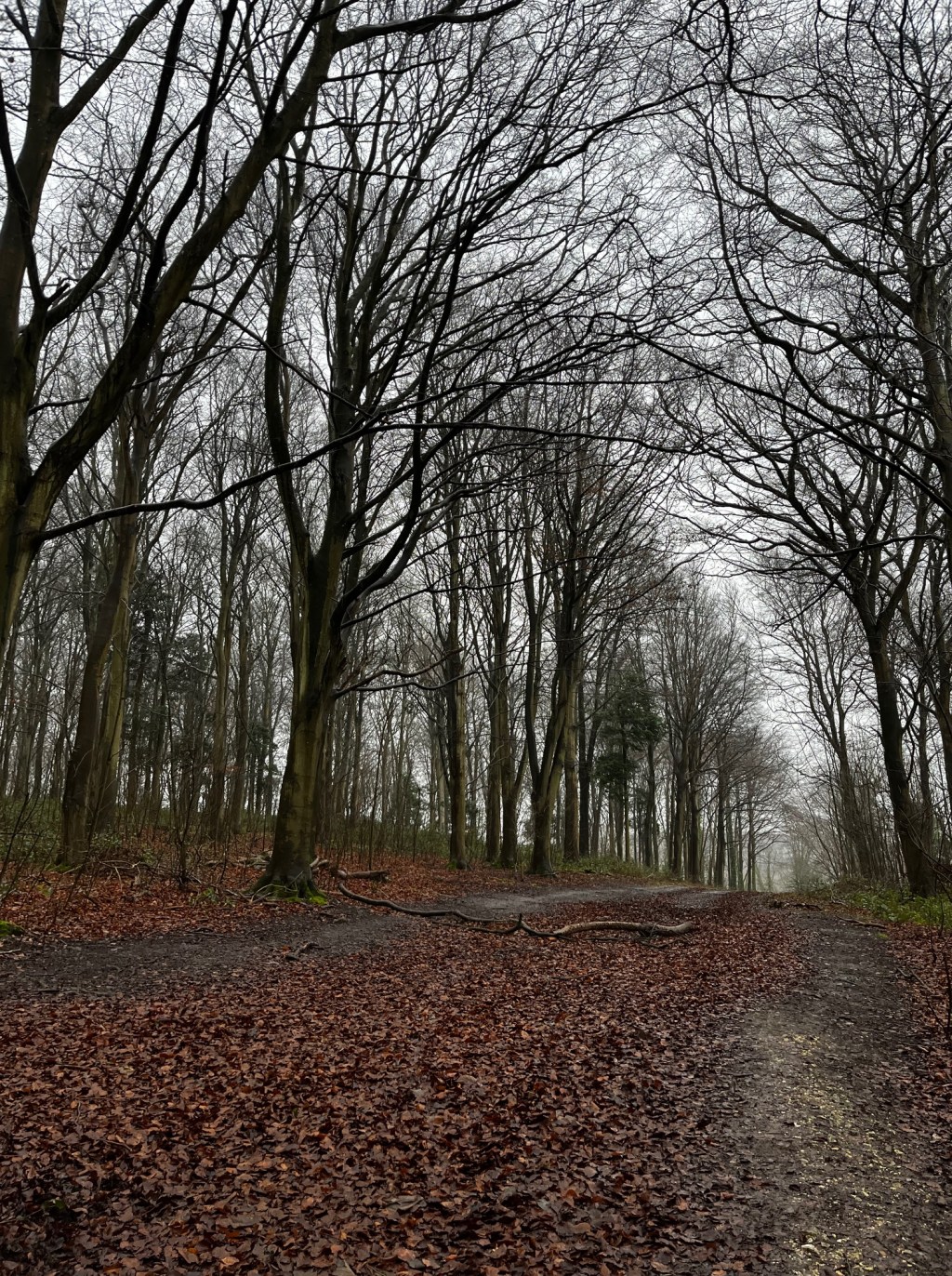
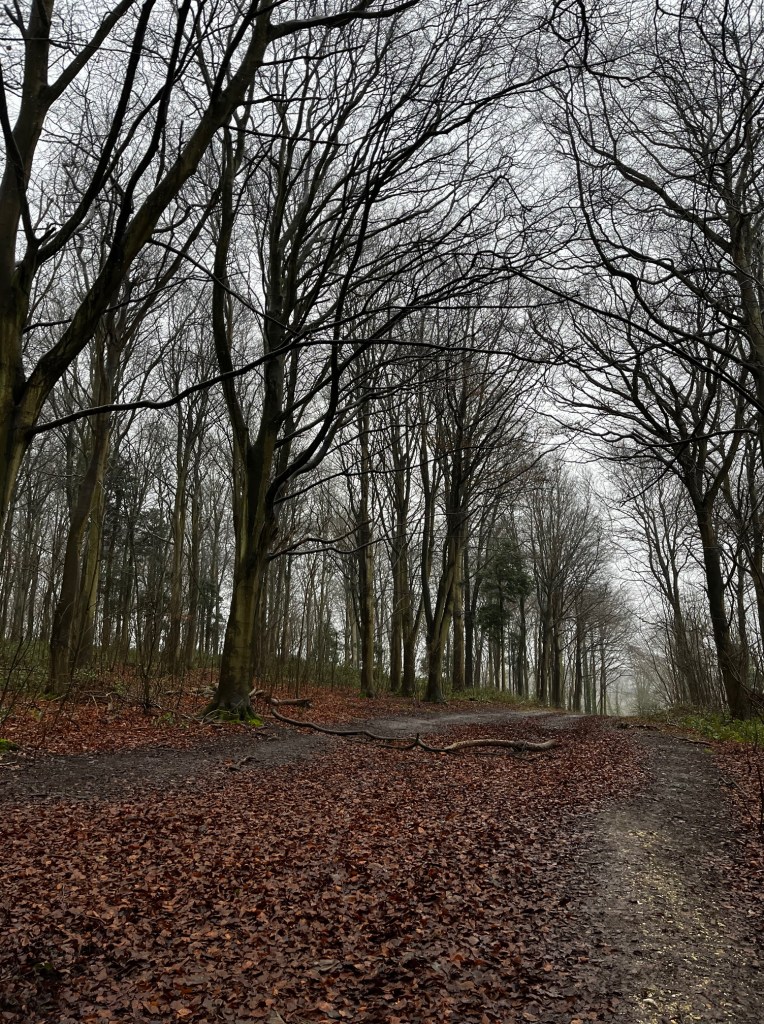
21st: Friston Forest in January looking skeletal.
Friston Forest is within the South Downs National Park between Lulington Heath National Nature Reserve and Seven Sisters Country Park it was planted in the 1930–40s by the Forestry Commission. The most common species of tree planted was beech, because of the chalk and limestone soil.
22nd: Pine and evergreen conifer.
The main function of a pine cone is to keep a pine tree’s seeds safe. Pine cones close their scales to protect the seeds from cold temperatures, wind and even animals that might try to eat them. They open up and release their seeds when it is warm and it is easier for the seed to germinate. Pine cones can stay on tree for more than 10 years before dropping to the ground. All conifers produce male and female cones. Sometimes on the same tree, sometimes not. The pinecones we see are only the female cones. The male cones are much smaller and not showy. You may have never noticed them. The male cones release pollen, which drifts into the air and eventually finds and fertilizes the female cones.

 Inspired by Nature