
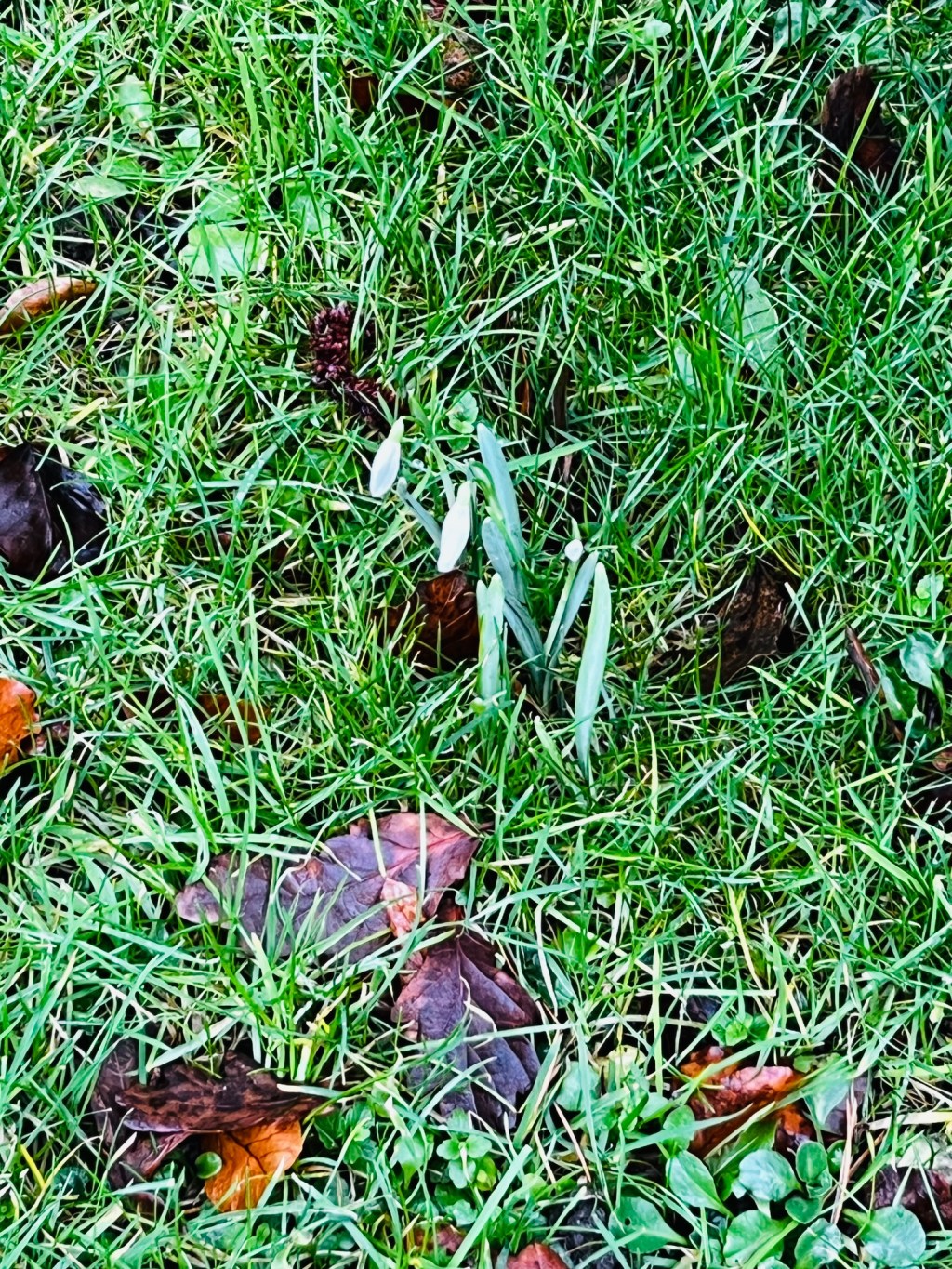
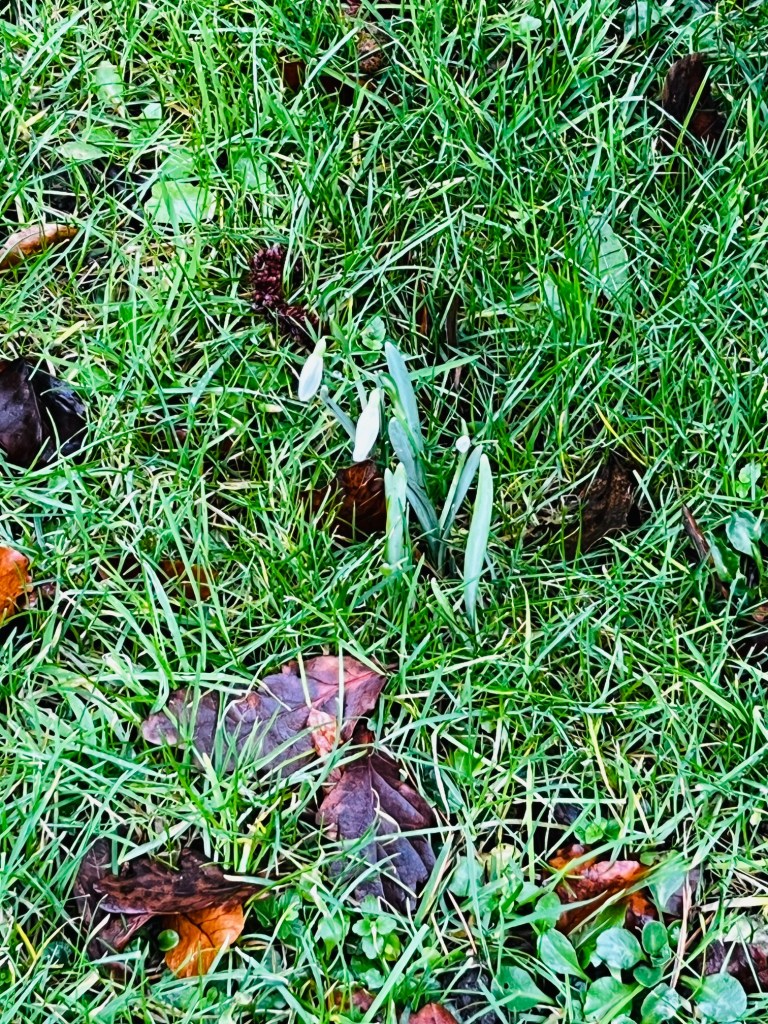
1st: Snowdrops.
Snowdrops have hard-ended chisel-like leaves (try feeling them) these help them push through the hard often frosty ground in winter,
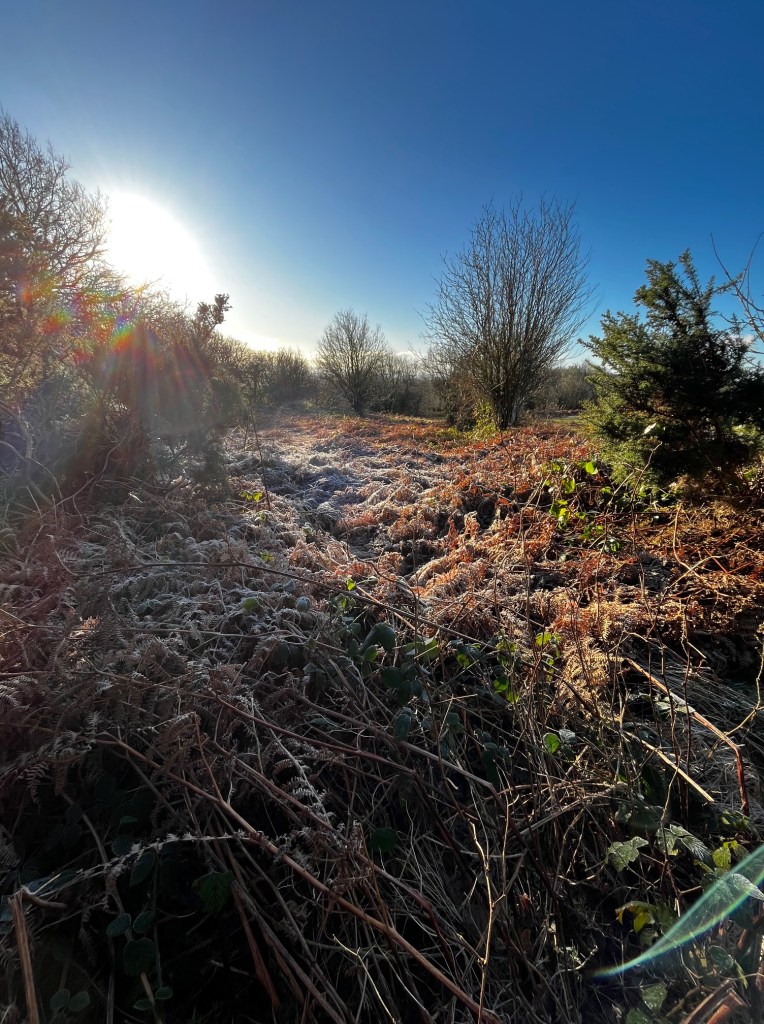
2nd: Frosty Bracken.
Unlike many ferns, bracken dies back in winter, leaving brown, withered fronds. Pteridomania or fern fever was a Victorian craze for ferns. Decorative arts of the period presented the fern motif in pottery, glass, metal, textiles, wood, printed paper, and sculpture.
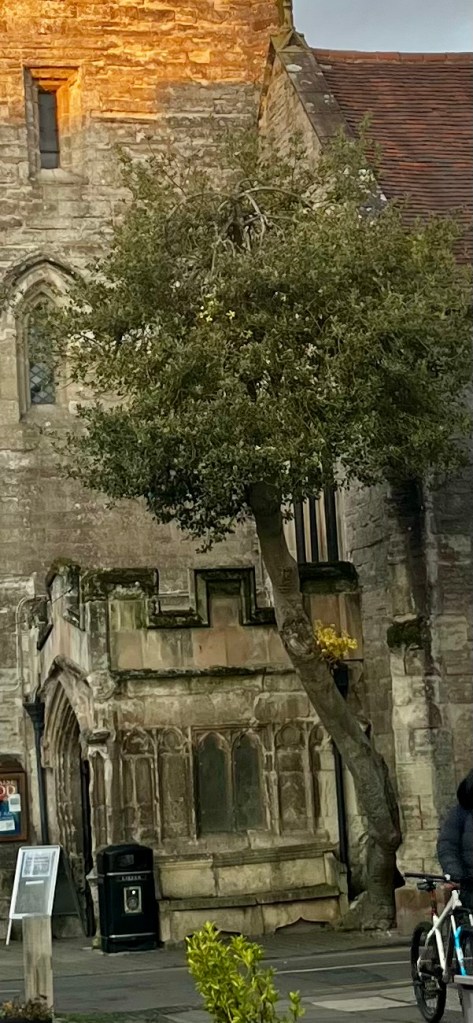
3rd: Unidentified tree.
St. John the Baptist Church in Henley-in-Arden, Warwickshire, seems to be growing out of the side of the church.
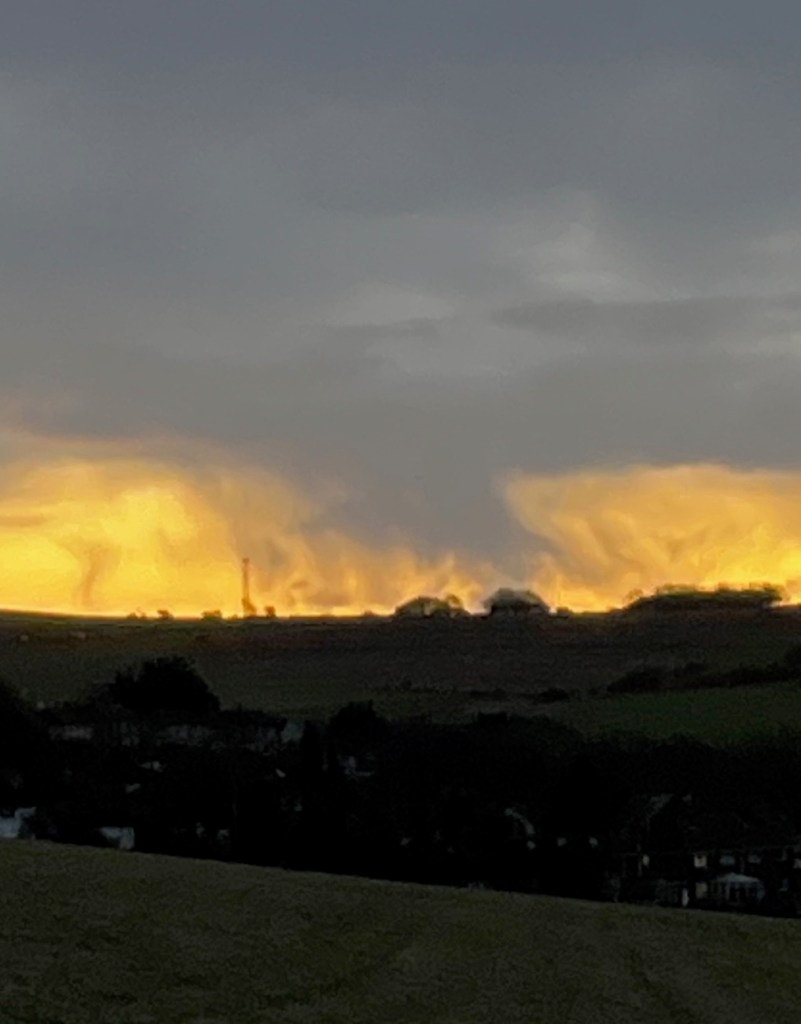
4th: Unusual cloud formations at sunrise on Bevendean Down
Prompt to learn some cloud ID. As a complete novice this one looks closest to Cirrus Fibratus. Cloud ID chart here https://www.weatherbriefing.com/educational/cloud-identification-chart
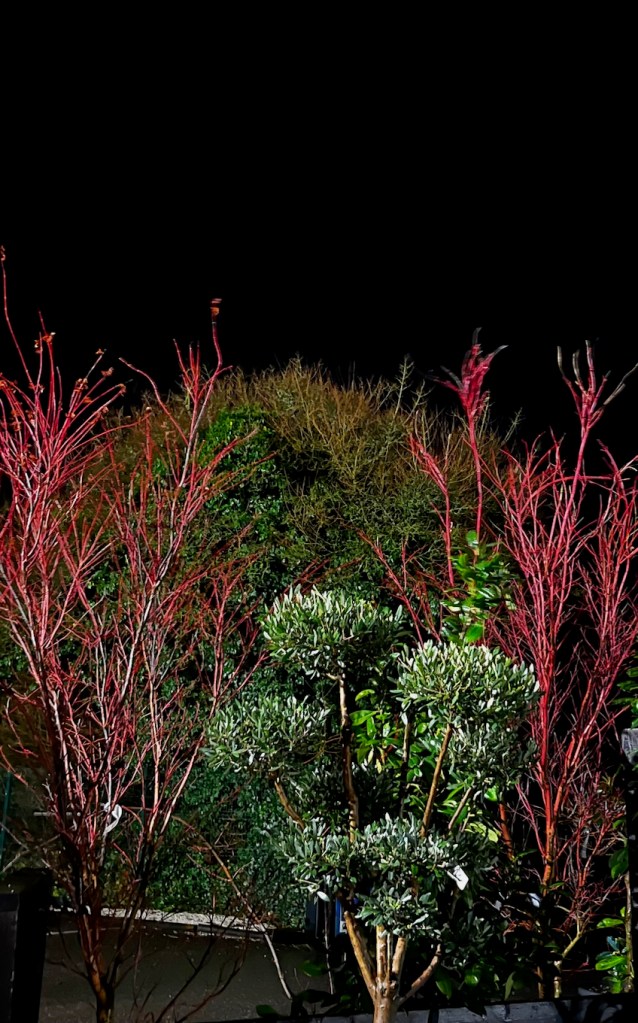
5th: Acer & Pom Pom Olive tree
Starkly contrasted colours of the Acer and black night sky. There are 1000’s of difference Japanese Acer trees. Acer palmatum tends to be the best for ornamental purposes (https://www.jacksonsnurseries.co.uk/guide-to-japanese-maple-trees.html)
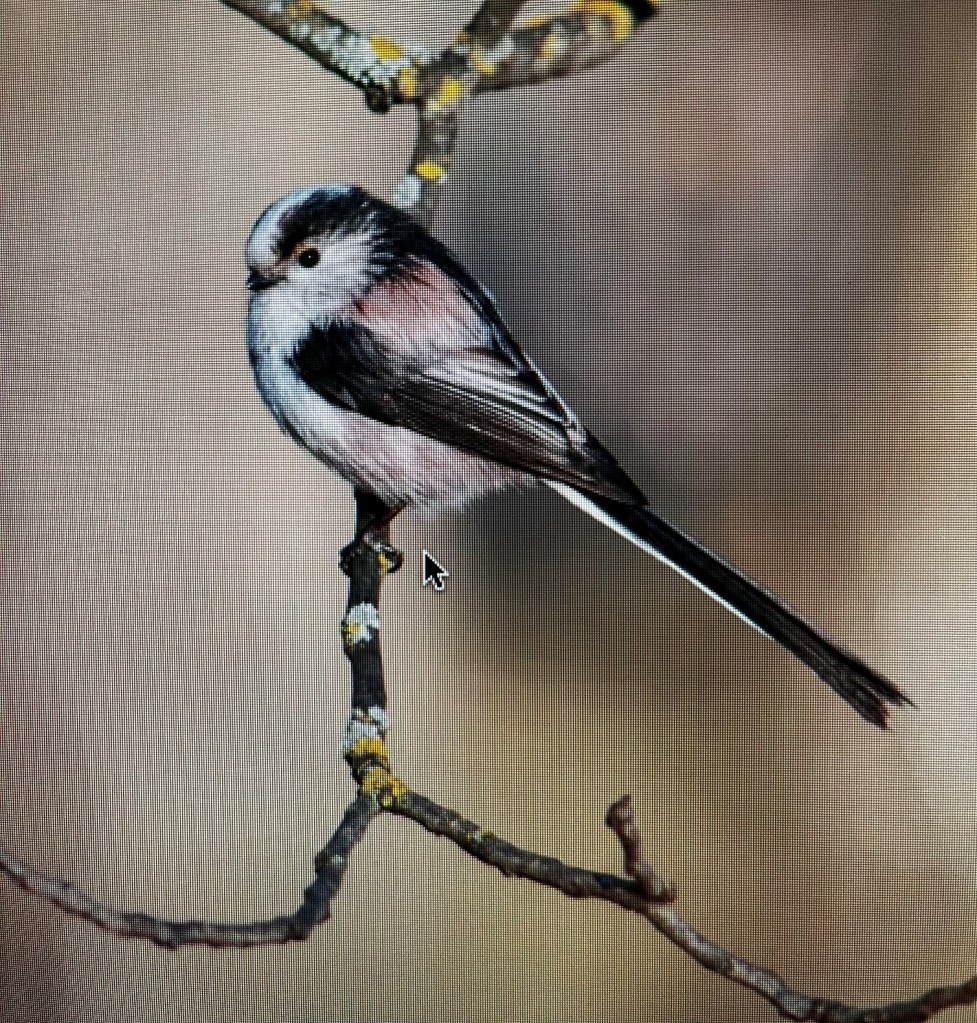
6th: Long-tailed tit.
The long-tailed tit is a tiny bird of hedgerows, woodland, parks and gardens. It builds a domed nest out of moss in a bush or the fork of a tree, and camouflages it with cobwebs and lichen.
https://www.wildlifetrusts.org/wildlife-explorer/birds/tits-crests-and-warblers/long-tailed-tit
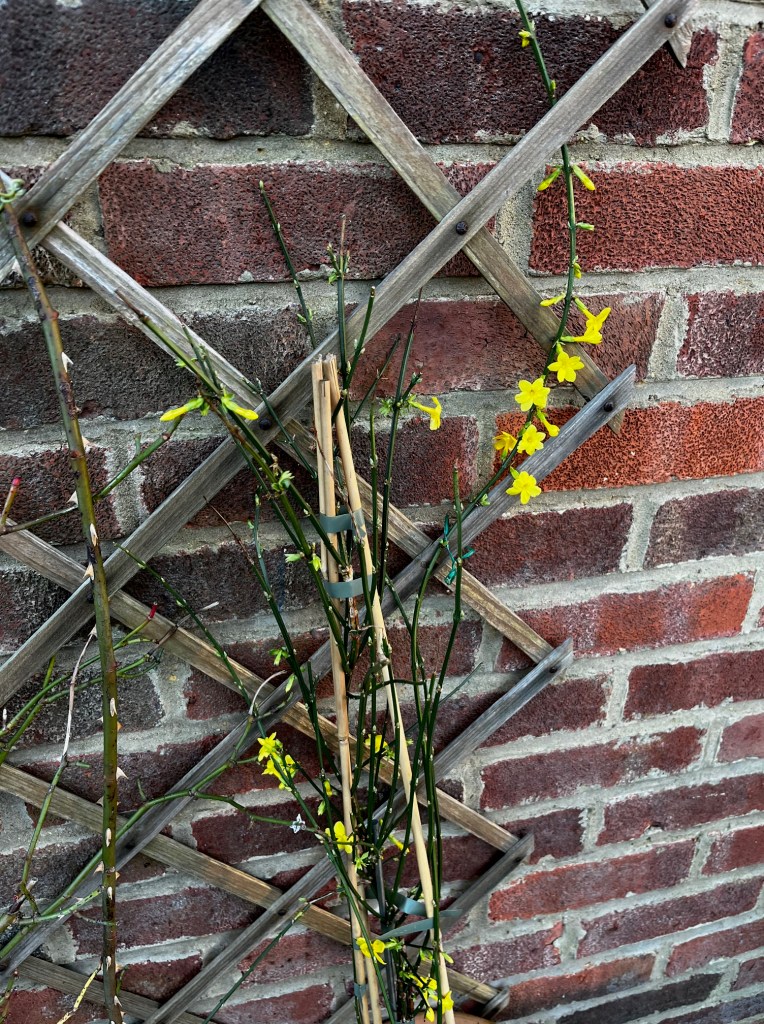
7th: Winter flowering honeysuckle.
Certain plants which bear flowers through out the year start bearing smaller flowers during winter. It is mainly due to photoperiodism, which is defined as the flowering response of a plant with respect to length of days.
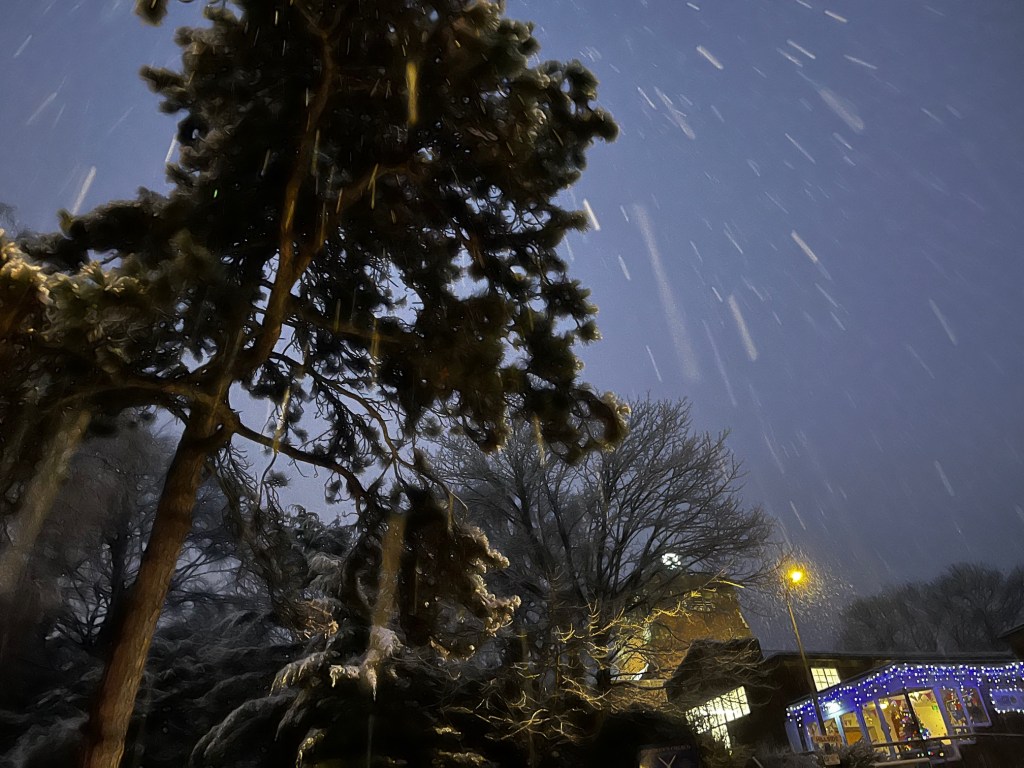
8th: Snow in Brighton!
It snows less near the coast because it is generally a few degrees warmer on the coast during the winter.

 Inspired by Nature